The Architecture of Memory: Dedicating the Buffington Island State Memorial Park and McCook Shrine
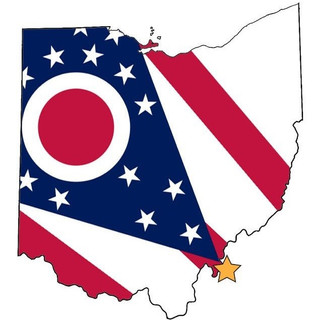
In the decades immediately following the Civil War, a massive national movement sought to permanently mark and sacralize the disparate landscapes where American blood had been shed. The memorialization phase for Buffington Island gained significant momentum in the late 1920s and early 1930s, as aging veterans sought to institutionalize their legacy. After the battle, the landscape had largely reverted to agricultural farmland and remained as such for nearly seventy years until 1929. That year, Mrs. Norma Calkins Peoples - the granddaughter of Charles and Sarah Price, who originally owned the land in 1863 - expressed a desire to donate a portion of the battlefield to the state of Ohio.
This generous land donation was shepherded through the Ohio General Assembly by Representative Tom W. Jones, who drafted House Bill 273. Filed with the Secretary of State on April 26, 1929, the bill formally authorized the Ohio State Archaeological and Historical Society to receive the site at Portland by gift and appropriated $3,000 to construct an appropriate monument honoring the Union soldiers who turned back Morgan's raiders. This legislative milestone effectively anchored the historical memory of the battle to the agricultural landscape of the Portland Bottom.
The vanguard of this commemorative effort was driven collaboratively by the Ohio State Historical Society and the deeply influential Daughters of Union Veterans of the Civil War (DUV). On October 3, 1933, to formally mark the seventieth anniversary of the battle, the Buffington Island State Memorial Park was officially dedicated. To ensure public access and demonstrate the site's new significance, the Ohio Department of Highways specifically improved the localized road infrastructure leading to the site.
The visual and spiritual centerpiece of this newly established four-acre tract along the Ohio River was a substantial monument designed and constructed by Philip Keintz (often spelled Kientz), a self-taught master craftsman and stone mason from Columbus, Ohio. Constructed of local, broken glacial rock found in Ohio, combined with granite and mortar, the obelisk features a distinct bronze plaque on each of its four faces. This design choice was deliberate, ensuring the monument commemorated the multi-layered history of the specific geographical site rather than just the Civil War engagement. The plaques commemorate, in turn, the prehistoric mound builders of the Ohio Valley (north face), the Battle of Buffington Island itself, the federal soldiers and Ohio volunteers who fought and died there, and a specific tribute to the death of Major Daniel McCook (south face).
The 1933 dedication ceremony was a massive civic event, drawing an estimated 1,000 to 2,000 attendees. The crowd witnessed patriotic music by the Pomeroy American Legion drum corps, the laying of a floral wreath, and speeches from the governors of Ohio and West Virginia. Significantly, four surviving local Civil War veterans - Robert Griffith, Charles Kraft, J.Q. Adams, and J.B. Warner - attended the ceremony and were given seats of honor to witness the institutionalization of their legacy.

A year later, in May 1934, the memorialization of Major Daniel McCook was further formalized with the dedication of a secondary, highly specific site known as the "McCook Shrine". Located approximately 1,800 feet north of the "S-curve" on State Route 124, within the core area of the battlefield and about a quarter-mile from the main memorial park, this site explicitly marks the approximate geographical location where McCook was mortally wounded. The Ten Districts of the Ohio Department of the Daughters of Union Veterans funded the installation of a prominent stone and bronze memorial plaque that reads: "ABOUT ONE THOUSAND FEET SOUTHWEST OF THIS MONUMENT MAJOR DANIEL MCCOOK OF THE FAMOUS 'FIGHTING MCCOOKS' FELL MORTALLY WOUNDED IN THE BATTLE OF BUFFINGTON ISLAND JULY 19, 1863".
The landscape architecture of the McCook Shrine reflects a deliberate, highly structured attempt to create a somber, reflective space distinct from the surrounding agricultural fields. The primary monument was integrated into a larger, landscaped environment enclosed by low, semi-circular dry-laid stone walls at the north and south ends. A dry-laid stone path was constructed to allow visitors to physically encircle the monument, and two large stone benches were installed slightly behind the monument to encourage prolonged contemplation. A secondary bronze plaque was added during the 1934 dedication on a smaller natural stone, reading: "THIS SHRINE DEDICATED MAY, 1934, TO THE MEMORY OF OUR FATHERS OF THE GRAND ARMY OF THE REPUBLIC". This 1934 dedication ceremony featured music played by the local American Legion band, speeches, and notably, the return of three of the four Civil War veterans who had attended the main monument's unveiling the previous year.
While historical records do not detail frequent, large-scale reunions of actual Civil War veterans at the park in the ensuing decades (largely due to their rapidly dwindling numbers), the tradition of memorialization has been robustly perpetuated by descendant and heritage organizations. Entities like the Sons of Union Veterans of the Civil War (SUVCW) and the Daughters of Union Veterans have continuously utilized the park since the mid-20th century to host annual memorial services, living history events, and wreath-laying ceremonies, ensuring the site remains an active focal point for remembrance long after the last veterans have passed.
This year marks an additional effort to enhance the historical record at the McCook Memorial. Through the efforts of the Civil War Round Table of the Mid-Ohio Valley, a new marker will be installed that details the story of the Marietta Militia, a unit that played an unknowingly important role in preventing the Confederates of Morgan's command from crossing the Buffington Island Ford. This marker will be dedicated at the annual Buffington Island Battlefield Memorial Service, to be held at 11:00 a.m. on July 18, 2026. This year's service promises to be the largest one held in years, and will provide a brass band playing Civil War era tunes and a picnic lunch. While not reaching the 1,000-2,000 attendees of the 1933 event, this will be a seminal moment in the memorialization of Ohio's largest Civil War battle site.


Comments